Friends, I am forced to publish this because the supposedly leading "news" organization in India has refused to publish this. Yes, I am speaking about the The Times Of India. Numerous letters to their online editor has been intentionally ignored. If you read on you will know why.
For the past two months I have been tracking the "progress" or non-progress of the monsoons in India, primarily because I can't stand summers. To do this I use various tools freely available on the web for research. I will cover these as I go on later and explain how I reached my conclusions which is coming up next.
The monsoons this year in India will be as bad if not worse as last year. Period.
Shocked? Oh you would say, look at what the met department said. I know what they have said, they have sheepishly admitted that monsoons in June have been deficient for which they do not have any plausible reason but they actually have revised the forecast to 102% of the yearly average !!! Of course, again without any plausible reason.
All this is bull****. The met department is pulling a fast one on its own citizens. So why has the monsoons not been normal, why is it so stalled, why does it look like this as shown here?
Winds are clearly moving from West to South which is in fact the opposite direction of the SW monsoon? If you ask the met department they will hem and haw their way out of their answers. They cant be blamed much since they are like blind men throwing darts at the dartboard. They lack the tools made available to them for analysis. Either that or they are too lazy. Do you know that India has only two satellites, yes two only, for weather prediction? One is Kalpana and the other is Insat 2E. Kalpana was launched 17 years ago and Insat 2E in 2003. Compared to that, we have nine satellites for defense purposes and reality TV watching. BRAVO. But I digress.
So why does the 2010 monsoons look like this? Here's why.
Because of the ENSO effect from last year. ENSO stands for (El Nino - Southern Oscillation). In short it is the extraordinary warming up of the ocean surface of the equatorial Pacific. You can check the images below.


These images are from the 1st of July, 2010. Check the Equator marked by 0 in each image (there are four of them). You will see still unusually warm waters in the range of around 28-30 C specially nearer the Indian ocean. Some cooling has started if you check the last two images which shows there are high chances of a La Nina effect which is opposite of El Nino where the waters in the equatorial pacific are colder than normal which is eventually pushed towards the West that is towards the Indian Ocean but this is going to take months probably next year. I will write more about the La Nina effect and the research around it in another post.
Now about El Nino. It is generally formed in the month of December, so it happened last year, and lasted for some time, pushing unusually warm waters into the Indian ocean. So this is how the Indian Ocean looks like now.

Remember this is 1st of July and it still looks like this somewhere between 28-30 C. How can moisture from the ocean rise up and get into the Indian mainland? In fact, the opposite is happening. Moisture is being dumped into the ocean from the Indian mainland as it always flows to a low pressure area from a high pressure area and currently the pressures above the Arabian Sea and Bay of Bengal are pretty low. Hence we see the phenomenon of the West-South Monsoon (this is here by trademarked).
So why has the Indian Met department not spoken up despite regularly publishing its monsoons updates on its monsoon page here. If you look around, you will find a link called "Accumulated Rainfall" in the right hand area of the page. Click on it and it will show an image about the monsoon deficiency till date. Surely looks more than 16% which they announced today in TOI?

One look and it will tell you that the food producing belt of West Bengal, Bihar, Uttar Pradesh, Madhya Pradesh, parts of Gujarat, Harayana and Punjab are staring at a possible drought. We obviously could have been better prepared since all this started with the El Nino last year. India is still an agrarian state heavily dependent on the monsoons in fact I read somewhere up to 70%. If the monsoons fails, prices rise, farmers suffer and the common man faces enormous difficulties.
So why has this news been suppressed by the government and the media. They continually make announcements postponing the onset of the monsoons making lame excuses every time. First it was 15th June, then it was 25th June, then 1st July and now 15th July. I am sure there will be a new date announced on the 15th. Bad news is bad for the stock market. The sensex would straight away lose 3000-4000 points if this announcement is made. Its anybody's guess who is making money off this artificial stock bubble in India based off suppressing bad news.
As it looks to me now, July could be equally bad and monsoons will be pretty deficient this year too. Forget about the crap about La Nina that the Met department feeds the media and that there will be heavy rains in September. I have a simple question which the media fails to ask. Doesn't heavy rains at the wrong time mean floods? Indian agricultural is seasonal and it needs rains at the right time for it to succeed. What will the farmers do in September? Actually because of the La Nina if at all it happens, the rains will be heavier and more than average next year and not this year. I will post some correlation of poor monsoons in India with El Nino in a later post to prove all this.
Clearly, this planning should have been done months ago by the government but I think they are too lazy and its important for the big corporate houses to make money off the stock market as long as they can. The media is only obsessed about scandals, sensational news and scantily clad women to promote their platforms for advertising. I see India turning the US way which has brought about its terrible downfall. While India fails, its citizens spend their time away watching reality TV.
Comments, criticisms are welcome but do some research before making one. Remember Stupidity is the strongest force on Earth closely followed by its cousin Ignorance.
For the past two months I have been tracking the "progress" or non-progress of the monsoons in India, primarily because I can't stand summers. To do this I use various tools freely available on the web for research. I will cover these as I go on later and explain how I reached my conclusions which is coming up next.
The monsoons this year in India will be as bad if not worse as last year. Period.
Shocked? Oh you would say, look at what the met department said. I know what they have said, they have sheepishly admitted that monsoons in June have been deficient for which they do not have any plausible reason but they actually have revised the forecast to 102% of the yearly average !!! Of course, again without any plausible reason.
All this is bull****. The met department is pulling a fast one on its own citizens. So why has the monsoons not been normal, why is it so stalled, why does it look like this as shown here?
Winds are clearly moving from West to South which is in fact the opposite direction of the SW monsoon? If you ask the met department they will hem and haw their way out of their answers. They cant be blamed much since they are like blind men throwing darts at the dartboard. They lack the tools made available to them for analysis. Either that or they are too lazy. Do you know that India has only two satellites, yes two only, for weather prediction? One is Kalpana and the other is Insat 2E. Kalpana was launched 17 years ago and Insat 2E in 2003. Compared to that, we have nine satellites for defense purposes and reality TV watching. BRAVO. But I digress.
So why does the 2010 monsoons look like this? Here's why.
Because of the ENSO effect from last year. ENSO stands for (El Nino - Southern Oscillation). In short it is the extraordinary warming up of the ocean surface of the equatorial Pacific. You can check the images below.
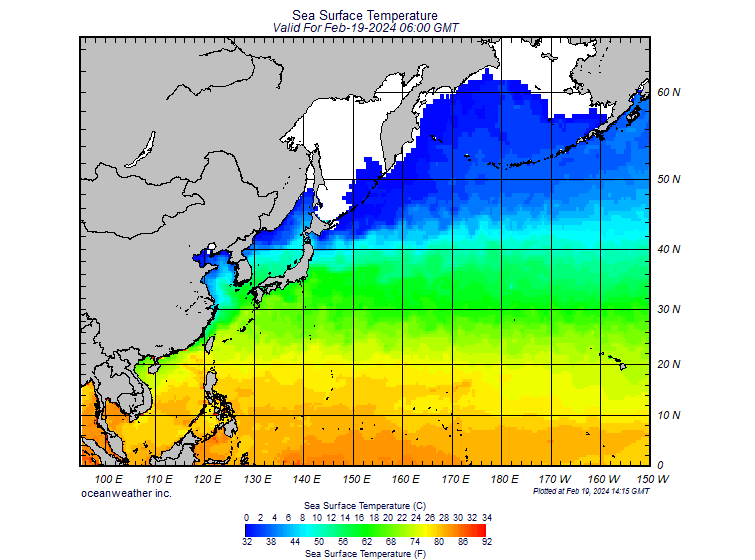
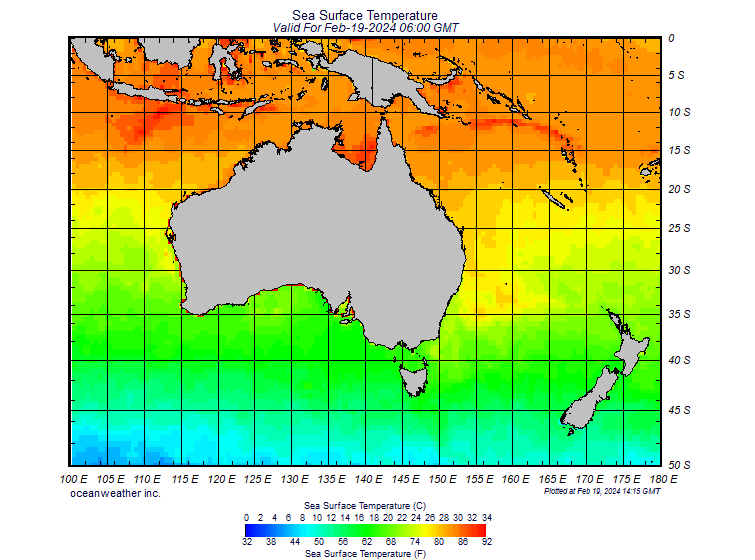
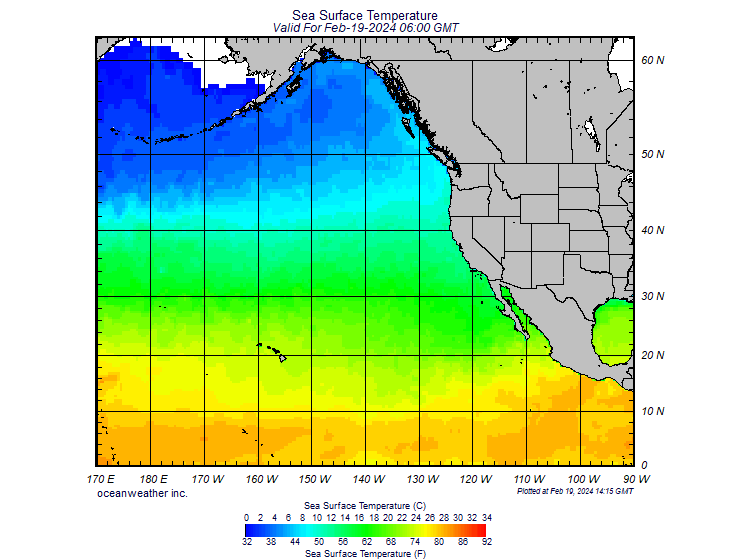
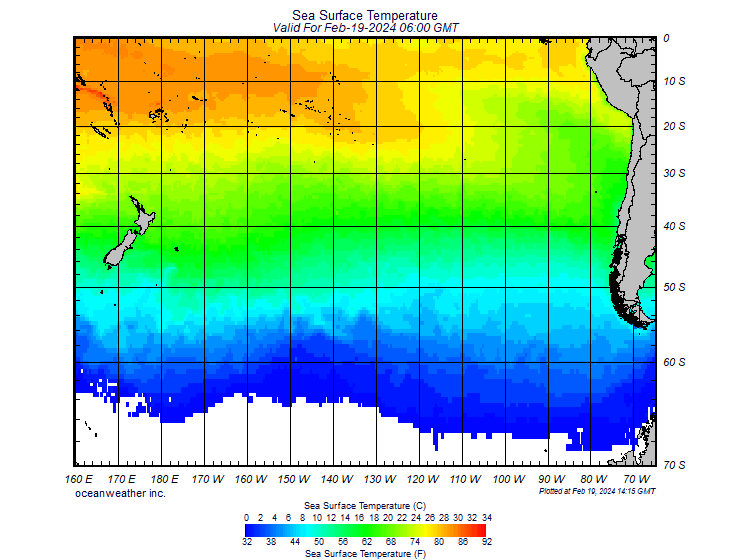
These images are from the 1st of July, 2010. Check the Equator marked by 0 in each image (there are four of them). You will see still unusually warm waters in the range of around 28-30 C specially nearer the Indian ocean. Some cooling has started if you check the last two images which shows there are high chances of a La Nina effect which is opposite of El Nino where the waters in the equatorial pacific are colder than normal which is eventually pushed towards the West that is towards the Indian Ocean but this is going to take months probably next year. I will write more about the La Nina effect and the research around it in another post.
Now about El Nino. It is generally formed in the month of December, so it happened last year, and lasted for some time, pushing unusually warm waters into the Indian ocean. So this is how the Indian Ocean looks like now.
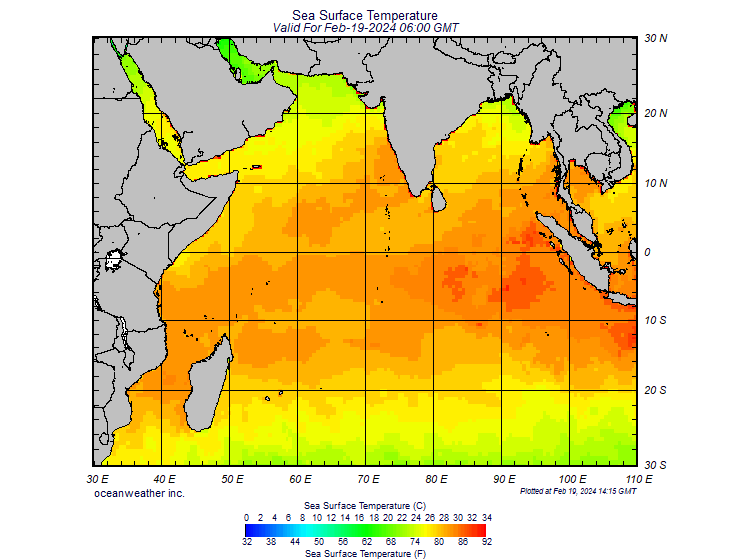
Remember this is 1st of July and it still looks like this somewhere between 28-30 C. How can moisture from the ocean rise up and get into the Indian mainland? In fact, the opposite is happening. Moisture is being dumped into the ocean from the Indian mainland as it always flows to a low pressure area from a high pressure area and currently the pressures above the Arabian Sea and Bay of Bengal are pretty low. Hence we see the phenomenon of the West-South Monsoon (this is here by trademarked).
So why has the Indian Met department not spoken up despite regularly publishing its monsoons updates on its monsoon page here. If you look around, you will find a link called "Accumulated Rainfall" in the right hand area of the page. Click on it and it will show an image about the monsoon deficiency till date. Surely looks more than 16% which they announced today in TOI?

One look and it will tell you that the food producing belt of West Bengal, Bihar, Uttar Pradesh, Madhya Pradesh, parts of Gujarat, Harayana and Punjab are staring at a possible drought. We obviously could have been better prepared since all this started with the El Nino last year. India is still an agrarian state heavily dependent on the monsoons in fact I read somewhere up to 70%. If the monsoons fails, prices rise, farmers suffer and the common man faces enormous difficulties.
So why has this news been suppressed by the government and the media. They continually make announcements postponing the onset of the monsoons making lame excuses every time. First it was 15th June, then it was 25th June, then 1st July and now 15th July. I am sure there will be a new date announced on the 15th. Bad news is bad for the stock market. The sensex would straight away lose 3000-4000 points if this announcement is made. Its anybody's guess who is making money off this artificial stock bubble in India based off suppressing bad news.
As it looks to me now, July could be equally bad and monsoons will be pretty deficient this year too. Forget about the crap about La Nina that the Met department feeds the media and that there will be heavy rains in September. I have a simple question which the media fails to ask. Doesn't heavy rains at the wrong time mean floods? Indian agricultural is seasonal and it needs rains at the right time for it to succeed. What will the farmers do in September? Actually because of the La Nina if at all it happens, the rains will be heavier and more than average next year and not this year. I will post some correlation of poor monsoons in India with El Nino in a later post to prove all this.
Clearly, this planning should have been done months ago by the government but I think they are too lazy and its important for the big corporate houses to make money off the stock market as long as they can. The media is only obsessed about scandals, sensational news and scantily clad women to promote their platforms for advertising. I see India turning the US way which has brought about its terrible downfall. While India fails, its citizens spend their time away watching reality TV.
Comments, criticisms are welcome but do some research before making one. Remember Stupidity is the strongest force on Earth closely followed by its cousin Ignorance.
